

Fair sounds and sights
and thoughts on our circumscription

Well, it’s been a hot minute since I last wrote to you. I’m sorry about that and aim (again) to improve. We’ll see how it goes.
Meanwhile, here’s an opportunity for you to improve! No, not really. I like my readers just the way they are.
However….
My little definition game from last time was very disappointing.
Why?
Far too few of you participated. Far too. It was shocking, really, how few of you gave it a try.
No one won. Of my (few) participants, pretty much everyone defined eminence and imminence correctly, but no one got immanence right. Meanwhile some of you out there absolutely and for certain know the meaning of the word immanence and yet you refused to play. Sad.
I made an error in asking for your response: these should have been written not privately to me via email but rather directly in the comments below.
So we’re doing this again. Correctly define the following words:
eminence
imminence
immanence
and write those definitions in the comments below. If you participated last time (hooray for you!), please by all means re-enter!
I promise you’ll get the results in the next newsletter and that said letter will be arriving on Monday, July 29th. So get after it.
And…. Need I say it? No looking up the words. This has to come from your brain, my friends. Your own private brain.
I said in my last letter that I’d be writing more about God’s repletive presence. I am going to write about it, but only a very little bit. Here goes.
You’ll recall that theologians describe God’s presence in the world as repletive: there is nowhere that he is not. This can be understood as omnipresence.
But by repletive, we also mean that God’s presence is full, which refers not only to his being everywhere, but to all of his Being being everywhere. You may remember how St. Augustine put it:
“Yet he is not spread out in space like a mass so that in half of the body of the world there is half of him and half of him in the other half, being in that way whole in the whole. Rather, he is whole in the heavens alone and whole in the earth alone and whole in the heavens and in the earth, contained in no place, but whole everywhere in himself.”
We aren’t at all like this.
Theologians call our occupation of space circumscribed. We can only be in one place at a time, no matter how a seeming efficiency might make us wish otherwise. We’re hemmed in by place. We have limits and edges. The outside of our bodies is the outside of our selves. In a sense, our occupation of space can define us— like so: “James was the person who was standing at the door.”
Our circumscription is so obviously the human experience that it really shouldn’t figure. It’s more familiar than second nature: it’s our very nature to be delimited by the place we’re in.
But I’ve been thinking about it nonetheless.
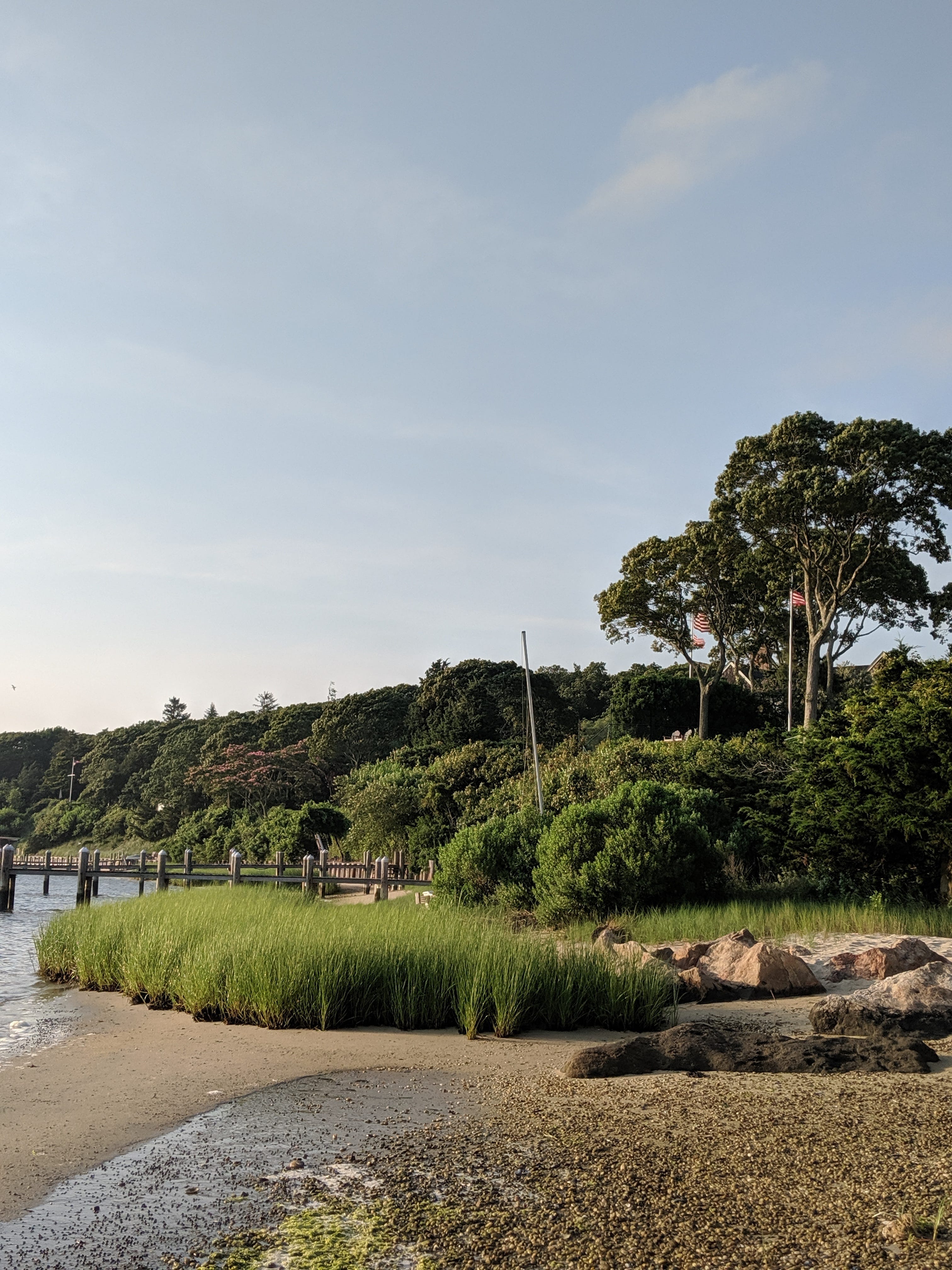
Just two weeks ago, I was with my family at my parents’ home on eastern Long Island. The house was built by my maternal grandparents in 1975, and I lived there every July from 1976-1986 with my sisters and grandparents. Since that time, I’ve been at that house— with rare exception— at least once every year. My husband proposed to me on an August night near the end of the curving driveway. My children played and now their children play in the playhouse my grandfather built in the woods that form the back yard.
When I was growing up, the little two-bedroom house was tight with all of us there. In those days, “all of us” totaled eleven: my family of five, my aunt’s family of four, and the grandparents.
Last week we were mostly just the offspring from my mother’s side: twenty in all, and four of us couldn’t come. It took an AirBnB and an obliging neighbor to ensure that everyone had a place to sleep.
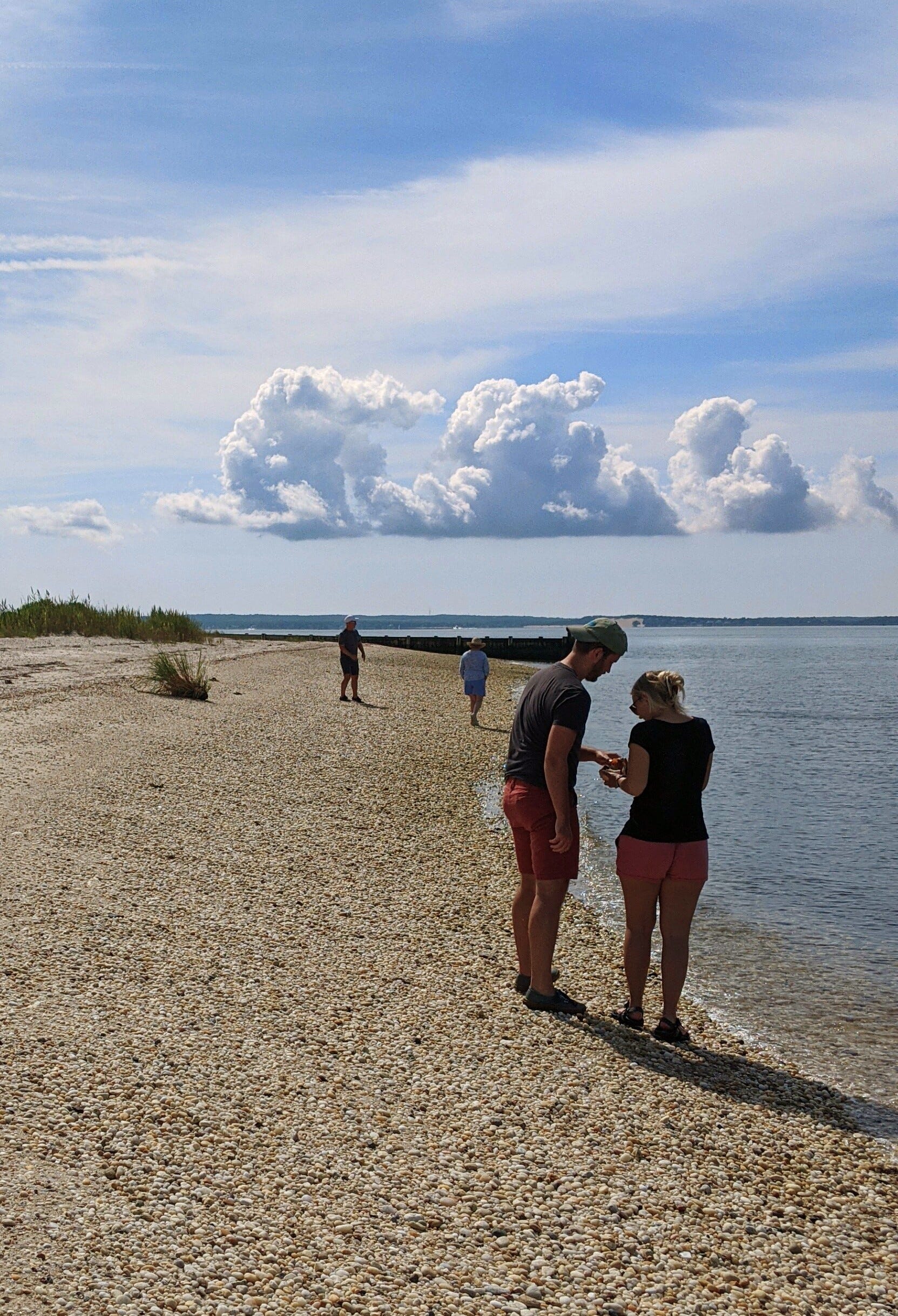
In June, anticipation of our week “out east” was acute. Conversation abounded regarding sleeping locations, means of travel, and who was bringing which baby equipment. About a month before our departure, one of my sons began a countdown on the family chat. A daughter-in-law created a spreadsheet for meal prep and must-do’s. My sister promised a sleeve of compostable plates. There was an aborted plan for an extra, dorm-sized refrigerator we could keep on the deck. We scheduled time for shopping in some favorite little towns, rides on the carousel in Greenport, an afternoon for a winery visit, mornings for the beach, and big chunks of the days for sailing.
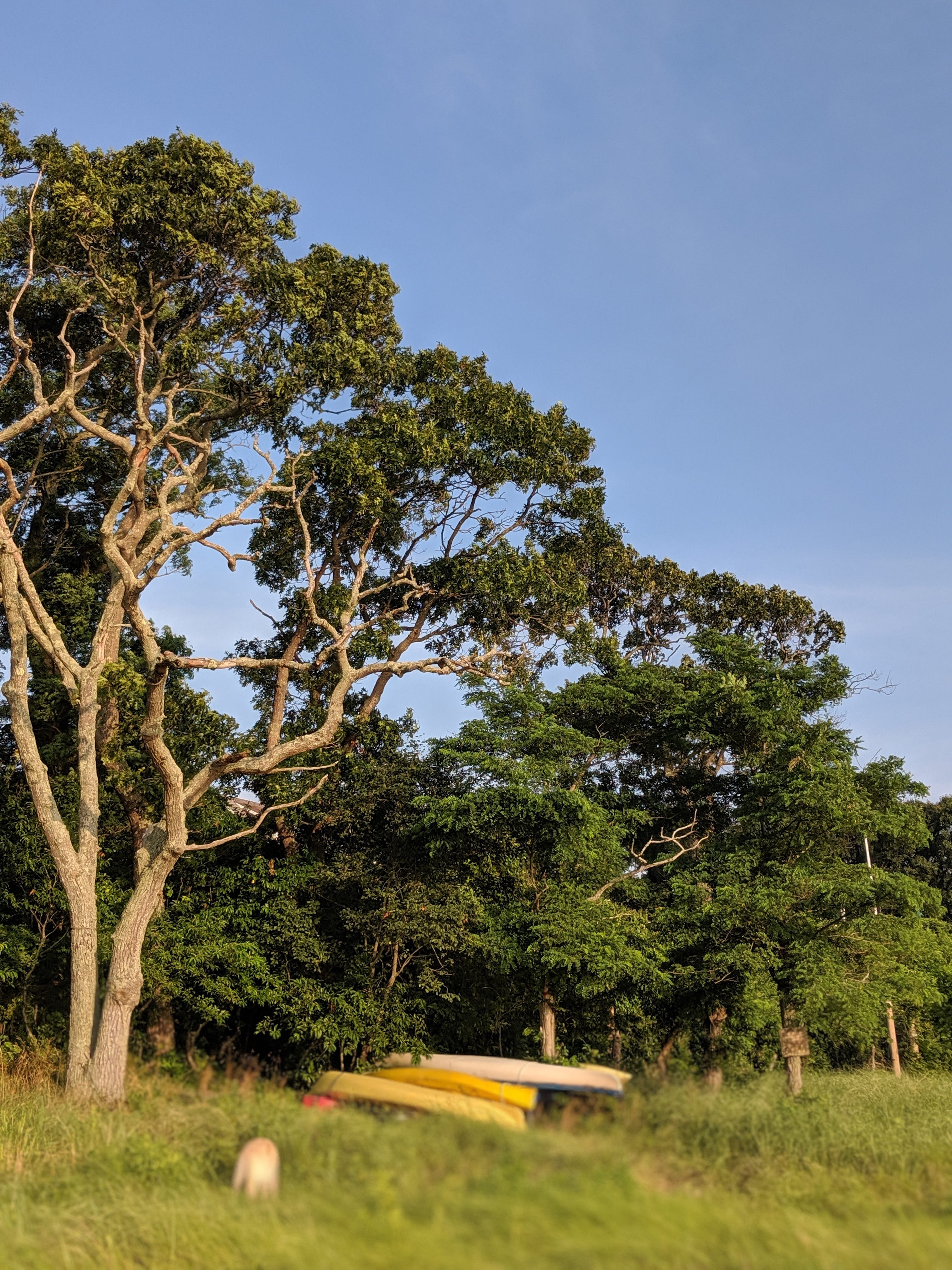
And then for a week we were actually there, circumscribed by sun, trees, and the sandy edges of our little peninsula.
Once I said to one son and another time to one of my sisters, “Every time I don’t want to be where I am, this is where I go in my mind.”
Each of them answered, “Me too.”
The language offered by philosophers and theologians— words like repletive, definitive, circumscriptive— is helpful. It brings some understanding of who God is and how we are like and unlike him. That God is limitless and we are utterly limited can— and one might argue should— lead to delight, gratitude, deep security, and worship.
But language always and only goes so far. And in this case, it makes an important distinction. God’s repletive presence means he has no outer edges, and he is fully present everywhere. Our circumscription only concerns our edges. It demarcates where we are but is silent on how we are present in those places. It has nothing to say, for example, about distraction in a classroom, or daydreaming in the grocery store, or about who a person might be when she’s spent ten of her formative Julys on eastern Long Island.
Circumscription as a concept knows nothing of all the time my sisters and I had to read with our feet in the sand, to play in the woods, to walk idly and alone through those woods to the beach. Or of the blackberries that ripened along the path toward the end of the month.
But because I was circumscribed there, I learned to recognize birds by their songs, went clamming with my grandfather, and tried to learn to dive off the end of the Collins’ dock.
Some mornings I awoke to a blue jay’s cry in the rain. I collected snails, minnows, and hermit crabs in plastic buckets. I feared horseshoe crabs; dug up fiddler crabs and held them by their claws; learned to sail a Sunfish.
Fell asleep to the sound of the wind in those trees.
I can’t really argue that I’m composed of these things. It’s probably too much to claim such things define a person. That kind of language is just figurative, but it also says something true.
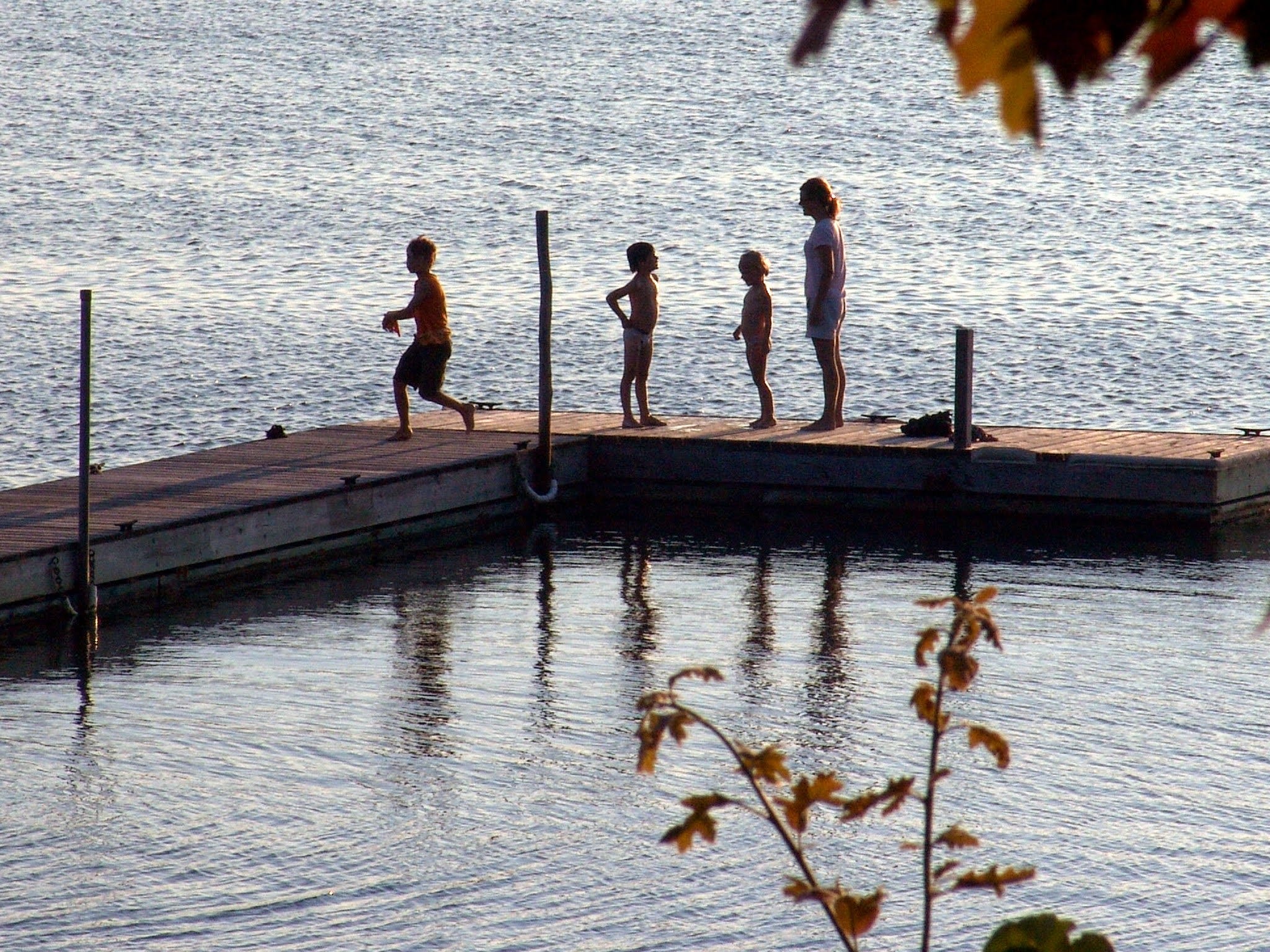
We were “out east” for one week, from June 30- July 7. Weeks like these are almost always uneven: not everyone arrives the same day; not everyone leaves at once. But the night before anyone had to go, most of us sat up late around the outdoor table, talking for a long time about keeping the house in the family.
It was a good conversation.
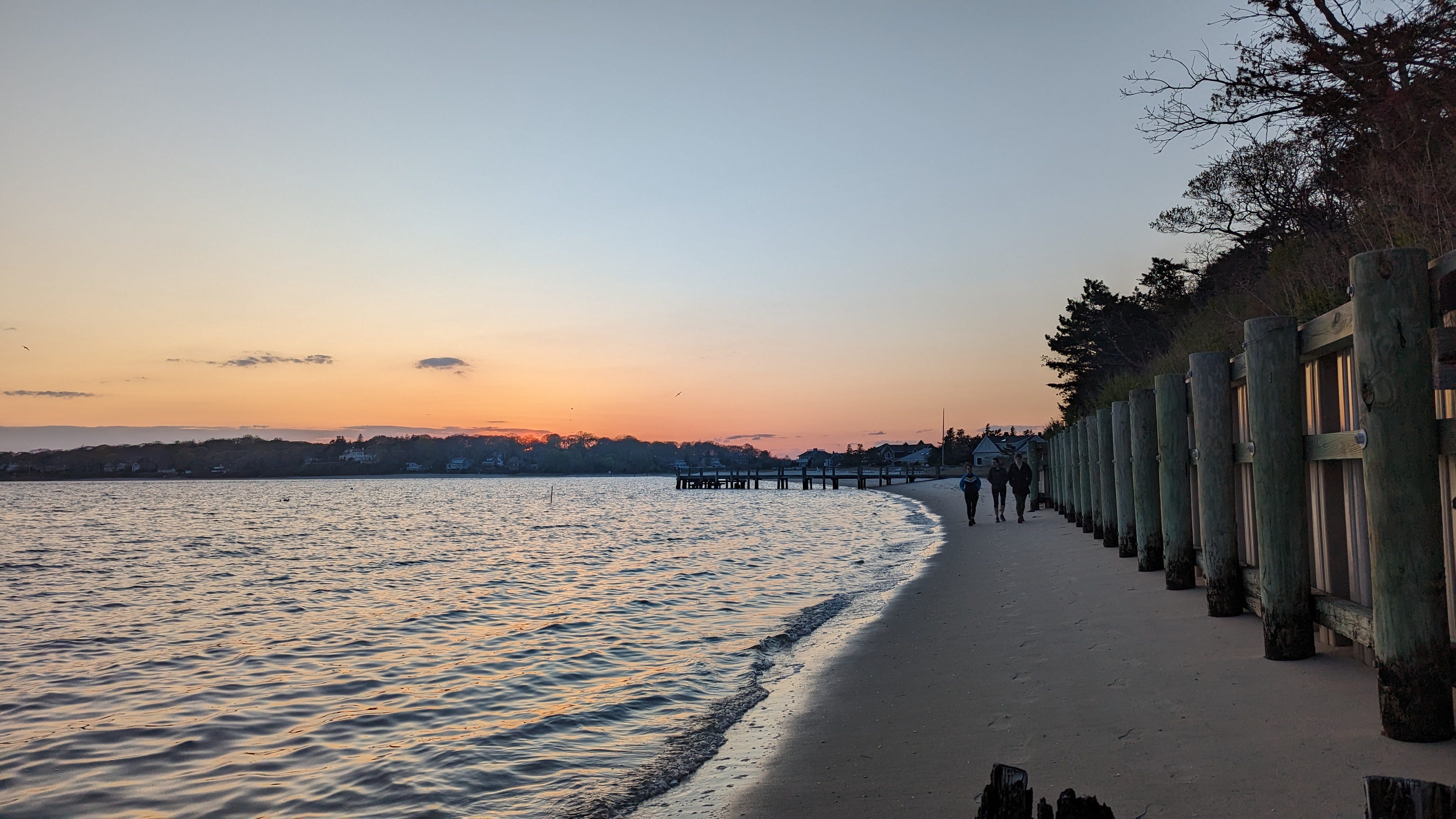
Some argue that place doesn’t matter. It’s the people that matter— and that’s true. We could be together anywhere, really. Some houses on the North Carolina coast are designed to fit twenty people and more; the mountains of Tennessee and Utah have them, too— I’ve stayed in some. I’m sure there are other places designed with crowds like ours in mind.
We’re not just circumscribed by place, but also by loved ones, by lineage, by history. And surely it’s the people that matter most.
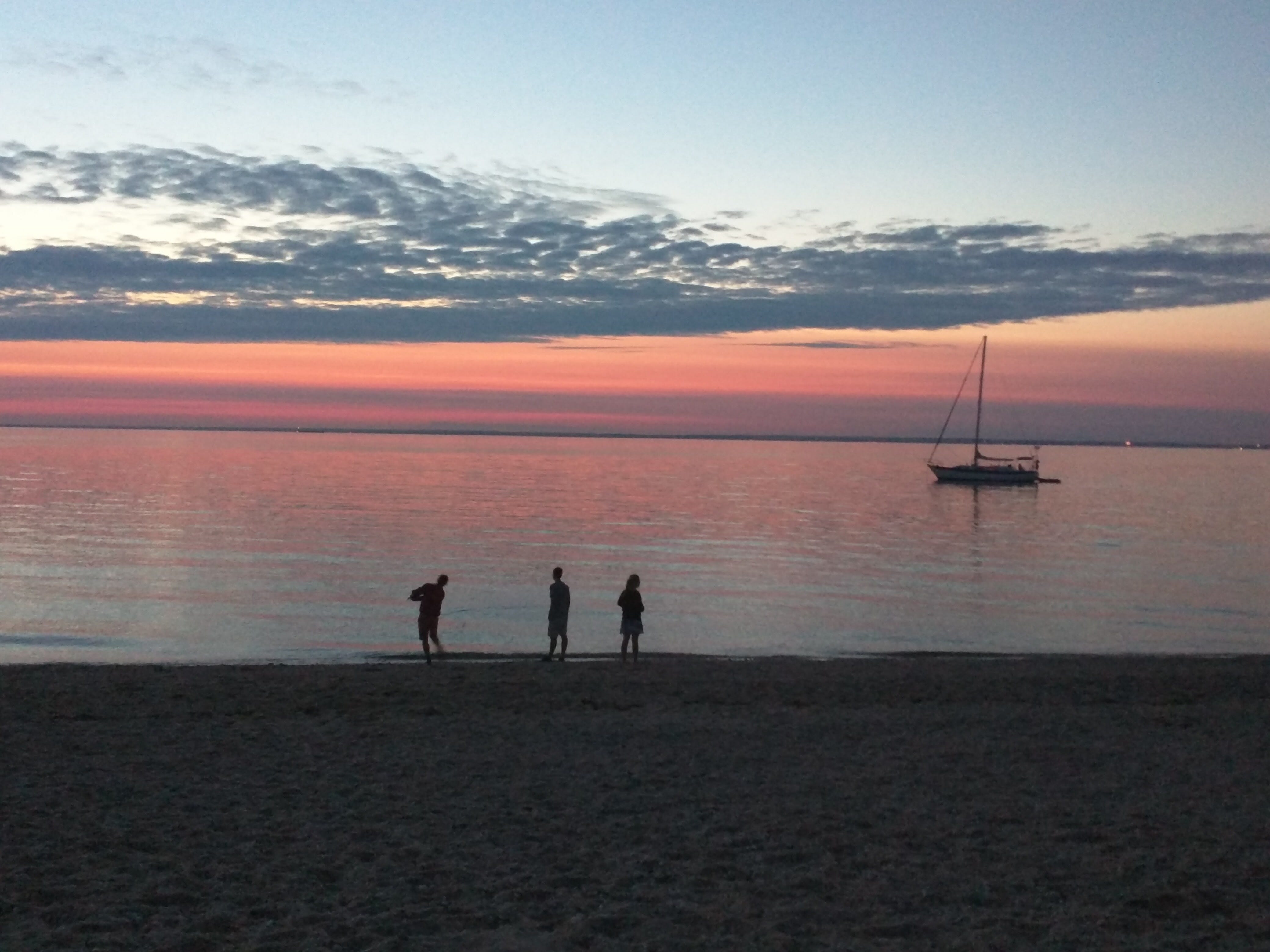
But place matters, too. It becomes defined not just by shoreline but by the people, experiences, and history we’ve known there.
I’m no theologian, but I do wonder about this particular difference between God and us: he is everywhere, filling everything. We’re only where we are.
Why might that be? We’re to rule with him over his beloved creation, but we can’t do it— as he does— all at once. So perhaps we’re circumscribed— in a home, a town, a plain or a peninsula— to learn to love what’s there.
And maybe also to be shaped by it.
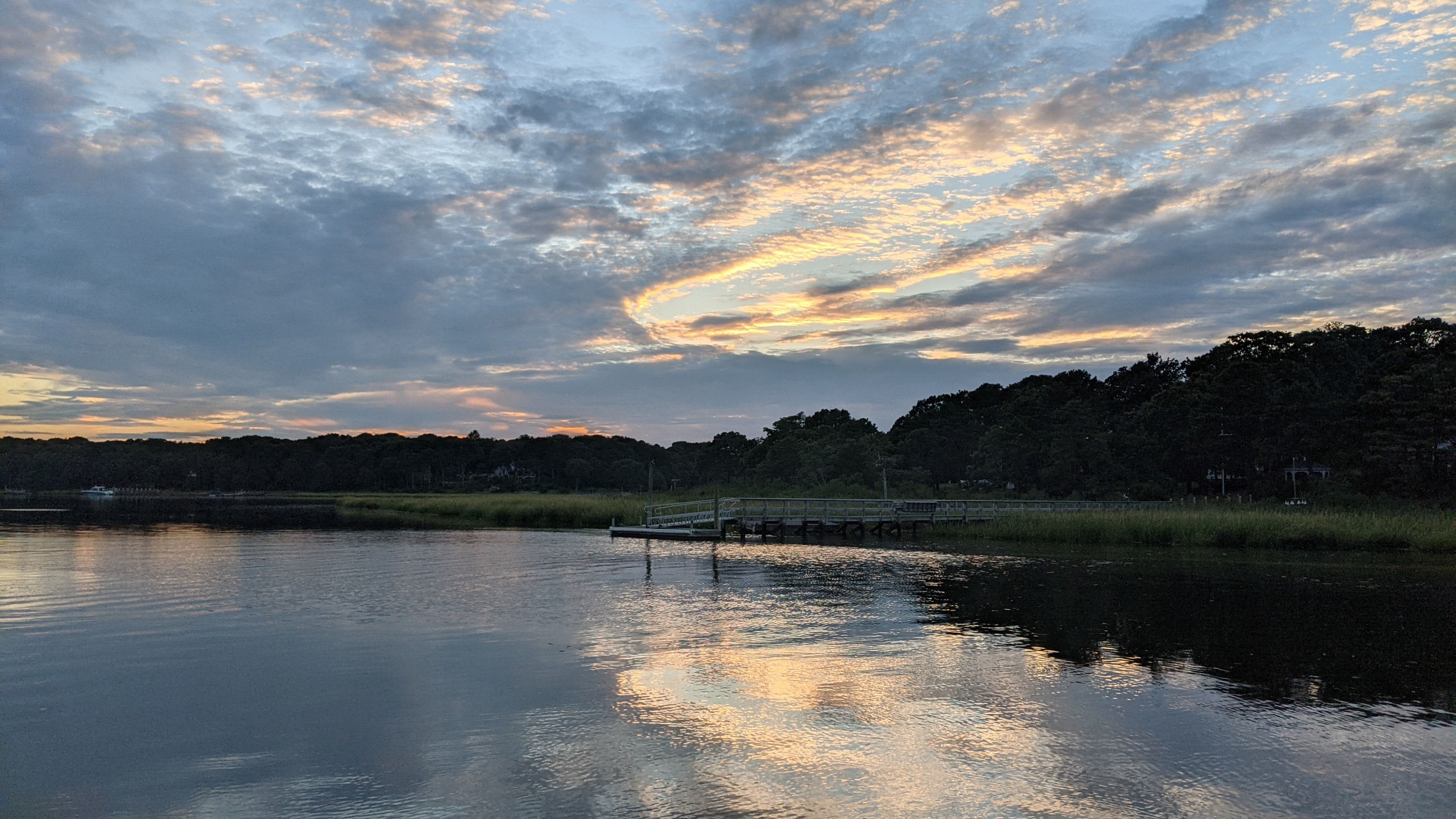
Here’s a poem about a place very near our little peninsula. I hope you enjoy it.
Long Island Sound

I see it as it looked one afternoon
In August,-- by a fresh soft breeze o'erblown.
The swiftness of the tide, the light thereon,
A far-off sail, white as a crescent moon.
The shining waters with pale currents strewn,
The quiet fishing-smacks, the Eastern cove,
The semi-circle of its dark, green grove.
The luminous grasses, and the merry sun
In the grave sky; the sparkle far and wide,
Laughter of unseen children, cheerful chirp
Of crickets, and low lisp of rippling tide,
Light summer clouds fantastical as sleep
Changing unnoted while I gazed thereon.
All these fair sounds and sights I made my own.

                                                  -Emma Lazarus, 1849-1887
I hope you love where you are this week. If not, I hope you find something to love where you are. Thanks for reading my newsletter, and don’t forget your definitions, which you’ll write forthwith (forthwith!) in the comments below.
With joy,
Rebecca
eminence: a little-known collaboration between the rapper Eminem and the rock band Evanescence
imminence: anagram of "icemen in me"
immanence: slang for "I am going to announce," as in "Immanence my intention to play basketball at Duke University."
Eminence- something regarding presence? Either that or the Eminem/evanescence thing, which would likely be awesome.
Imminence- gonna happen soon, probably.
Immanence- I don't know but it reminds me of the immaculate conception. I don't have a masters degree.